Critical Minerals

Critical minerals are fundamental to the global energy transition and the technologies of the future. Venezuela holds strategic reserves of these resources.

Minerals and metals are the foundation of modern life: they sustain industries, communities and social progress toward a cleaner and more equitable future.

From the devices that connect us to the clean-energy systems that power homes and industries, these resources are crucial to building a greener future. The global fight against climate change has placed critical minerals at the center of the economic and geopolitical agenda.

These minerals are indispensable for clean-energy technologies and industrial innovation. However, harnessing their potential requires solving the challenges linked to their responsible supply and production.

What are metals and minerals?

There are more than 4,000 known minerals and countless applications for metals: they are an integral part of every aspect of the modern world. Minerals are natural substances found in the Earth’s crust, with unique chemical compositions and crystalline structures.

Many minerals contain metallic elements and are the primary source of metals such as tin, iron, copper or lithium. Their properties — conductivity, malleability, corrosion resistance — make them indispensable, and they are often combined into alloys designed to meet specific requirements.

What defines a critical mineral?

There is no universally accepted definition. Classification varies depending on the priorities of governments and industries, but in general a mineral is considered critical when it is essential for economic and technological development and at the same time faces supply risks.

Relative scarcity

Limited reserves or those difficult to extract at industrial scale.

Geographic concentration

Production concentrated in a few countries, increasing supply-chain vulnerability.

Geopolitical risk

Export restrictions, sanctions or tensions that can disrupt supply.

In the context of the energy transition, certain minerals gain even more relevance: copper, lithium, nickel, cobalt, tin, tantalum and rare earths are essential for batteries, wind turbines, solar panels and electric vehicles. An electric vehicle requires six times more minerals than a conventional one, and an onshore wind turbine needs more than ten times more minerals than a gas plant of similar capacity.

The role of critical minerals in sustainability?

Critical minerals are fundamental to building a sustainable world. They enable key technologies for the UN Sustainable Development Goals (SDGs) and for compliance with the Paris Agreement.
SDG 6

Clean water and sanitation

Reliable water-treatment systems enabled by copper-intensive infrastructure.

SDG 7

Affordable and clean energy

Support for the deployment of low-carbon energy technologies, intensive in critical minerals.

SDG 9

Industry, innovation and infrastructure

Minerals and metals are the backbone of industrial development and technological innovation.

SDG 12

Responsible production and consumption

Promotion of recycling and the circular economy to reduce pressure on primary extraction.

CLIMATE ACTION

Energy transition

Lithium, cobalt and nickel for batteries; copper for electrical infrastructure; rare earths for magnets in turbines and electric motors.

CIRCULAR ECONOMY

Near-infinite recycling

Unlike many materials, metals can be recycled almost indefinitely, recovered from batteries, electric vehicles and wind turbines at end of life.

A just transition

For any transition to a clean energy system to be truly “just,” the raw materials that enable it must be produced responsibly. Responsible practices and standards are key tools to guarantee this.

The mining industry is concentrated in specific regions, often in countries where mining carries significant weight in the local economy. Supporting the capacity of producing countries is key for them to benefit from sustainable practices and contribute to global well-being.

Responsible production of critical minerals can generate lasting economic opportunities, especially in resource-rich territories such as the Arco Minero del Orinoco (AMO), where Dioconi operates.

Our portfolio

Select a mineral to learn about its properties, applications and how Golden Touch commercializes it with certified traceability.
Golden Touch 1127 - Our Products 1

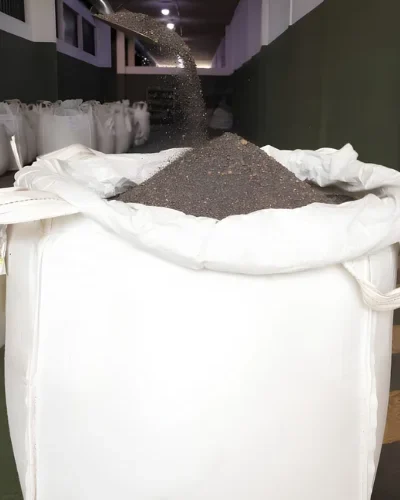
Cassiterite (Tin)

GOLDEN TOUCH'S MAIN FOCUS — TRADE WITH CERTIFIED TRACEABILITY.

What is it?

Tin oxide mineral (SnO₂), the world's primary source of tin.

Uses

Electronics, solder, food packaging, renewable energy (solar cells) and aerospace industry.

Venezuela and the AMO

The Arco Minero del Orinoco holds significant reserves of high-purity cassiterite.

Reference price

Quoted on the London Metal Exchange (LME).

Golden Touch

We are specialized traders of Venezuelan cassiterite with end-to-end certified traceability.
Coltan

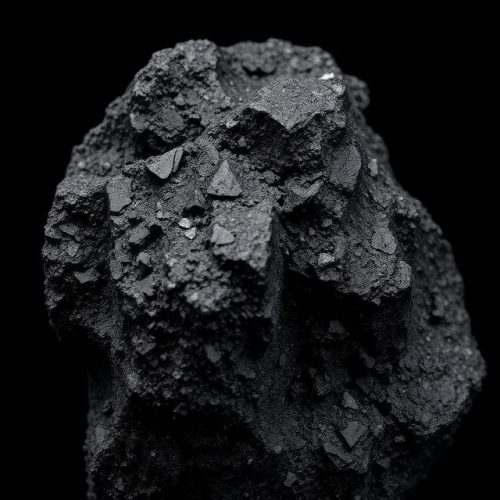
Coltan / Tantalum

STRATEGIC MINERAL FOR ELECTRONICS, ELECTRIC VEHICLES AND DEFENSE.

Strategic importance

Essential for electronic capacitors, smartphones, electric vehicles and defense applications.

Reserves in Venezuela

Venezuela holds one of the world's largest coltan reserves.

Golden Touch commitment

We trade Venezuelan coltan under strict conflict-free supply-chain standards.
Gold

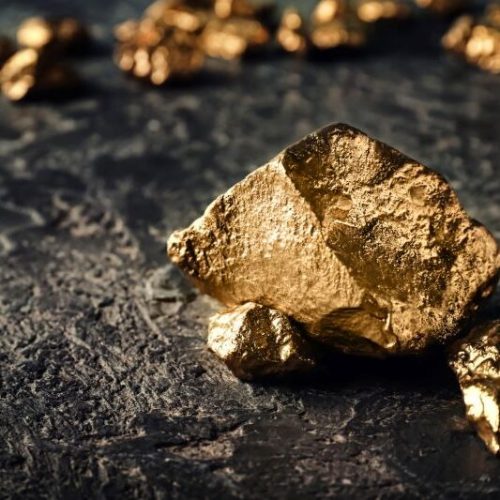
Gold

PRECIOUS METAL TRADED UNDER LBMA STANDARDS WITH FULL TRACEABILITY.

Applications

Jewelry, high-precision electronics and financial reserves.

Standards

Trade under LBMA standards with full chain-of-custody traceability.

STRATEGIC ORIGIN

Arco Minero del Orinoco (AMO)

One of the regions with the highest concentration of critical minerals in the world. Dioconi operates within the AMO under international standards of traceability and compliance, connecting these resources with verified buyers worldwide.

Want to learn more about Golden Touch 1127?

Let's talk about how our operations, traceability and standards can integrate with your supply chain.